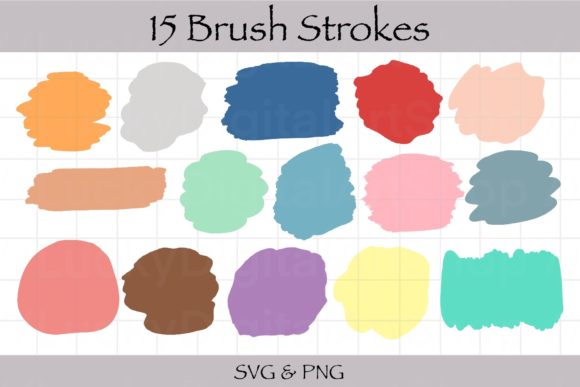
Reviewing Brush Stroke Sublimation SVG Clipart
As a designer who spends half my life staring at stitch charts and the other half trying to sell finished goods, I don’t have time for graphics that look good on screen but fall apart under the needle. When I first pulled up Brush Stroke Sublimation SVG Clipart, my initial reaction was less about technical specs and more about mood. There is a specific energy to brush stroke designs—they feel organic, hand-crafted, and slightly imperfect in a way that resonates deeply with today’s handmade market. But does it translate from a digital file into a tangible, high-value embroidered product? That is the question I set out to answer.
I approached this review not just as a critique of the graphic itself, but as an evaluation of its potential within a real-world embroidery project. Specifically, I wanted to see how this design would perform if I were preparing a custom order for a boutique client or listing a new item on Etsy. The goal is to determine if Brush Stroke Sublimation SVG Clipart offers enough visual weight and clarity to justify the labor of digitizing and stitching, or if it remains a pretty picture best left on paper.
The First Impression: Mood and Visual Personality
The moment you open the file, the aesthetic is clear. It belongs to the category of Print Templates and Graphics that lean heavily into modern, artisanal branding. The brush strokes are fluid, suggesting movement and creativity. This isn’t rigid geometric art; it’s expressive. For an embroiderer, this presents an interesting challenge. Unlike a solid block logo, a brush stroke relies on texture and edge definition to communicate its form.
In the context of a craft business, this design screams "personalized gift." It feels appropriate for nursery decor, where softness and artistic flair are prioritized, or for wedding gifts, where a touch of elegance is required. The visual personality is friendly yet professional. It doesn’t scream for attention like a neon graphic, but it holds its own quietly, making it a versatile background element or a central focal point depending on how you scale it.
Real-World Application: From Screen to Stitch
To truly test the viability of Brush Stroke Sublimation SVG Clipart, I imagined placing it on three distinct products: a canvas tote bag, a heavyweight sweatshirt, and a delicate baby onesie. Each fabric type reacts differently to design elements, and the success of the final product often hinges on these interactions.
The Tote Bag Scenario
Canvas is a forgiving fabric, but it has a rough texture. If I were using this as a tote bag design, I would likely treat the brush strokes as a large central motif. The irregular edges of the strokes can mimic the natural wear and tear of a well-loved bag, creating a cohesive aesthetic. However, without proper stabilization, the heavy thread coverage needed to define those strokes might cause the canvas to pucker. This is where understanding stabilizer choice becomes critical. A cut-away stabilizer would be non-negotiable here to maintain structure during the wash cycle.
The Sweatshirt Embroidery Challenge
Moving to knit fabrics introduces stretch. A sweatshirt embroidery project requires a design that can flex without breaking threads. Brush strokes, if digitized with dense fill stitch patterns, can become stiff and uncomfortable against the skin. I would advise using a lighter touch—perhaps combining running stitch outlines with sparse fill areas to keep the garment wearable. The visual appeal remains high, offering a trendy, streetwear vibe that appeals to younger demographics on platforms like Etsy.
Baby Items and Nursery Decor
This is perhaps the strongest use case. Soft cotton blends used in baby embroidery benefit from the gentle curves of brush strokes. It adds a layer of sophistication to what could otherwise be a basic christening gown or blanket. The design assets work beautifully here because they suggest creativity and growth. When presented as a printable mockup for online sales, these softer lines convey warmth and care, increasing buyer engagement.
Where Caution Is Required
No design is perfect, and Brush Stroke Sublimation SVG Clipart has specific limitations that designers must respect. It is not suitable for every situation. Here are the scenarios where I would hesitate before committing to production:
- Small Hoop Sizes: If you attempt to shrink this design down to fit a tiny 2x2 inch hoop, you will lose detail. The subtle variations in the brush stroke thickness may merge into a muddy blob. Keep the minimum size generous.
- Textured Fabrics: While canvas works, highly textured fabrics like chunky knits or bouclé can hide the nuances of the design. The contrast between the thread and the fabric texture may become too chaotic.
- Dark Fabric: Unless you are using high-contrast, metallic, or bright white threads, the subtleties of the stroke gradients may get lost. On dark backgrounds, the design needs bold definition to pop.
- Curved Surfaces: Applying this to a cap or hat requires careful hooping. The organic shape of the brush strokes may distort if the fabric tension isn't perfectly even across the curve.
- Dense Stitch Areas: Avoid placing this design over existing heavy embroidery. The combined stitch density could make the garment stiff and prone to tearing over time.
Practical Designer Notes for Execution
If you decide to incorporate Brush Stroke Sublimation SVG Clipart into your commercial embroidery workflow, follow these practical steps to ensure a professional finish:
- Test on Scrap Fabric: Never go straight to the final product. Run the design on the same fabric type you plan to use. Check for puckering, thread breaks, or color bleeding.
- Check Thread Color Contrast: The effectiveness of a brush stroke design relies heavily on the difference between the thread and the fabric. Test both light and dark thread options to see which provides better legibility.
- Inspect Small Details: Zoom in on your digitizing software. Are the corners sharp? Do the inner loops of the stitches overlap cleanly? Poorly executed digitization can turn a beautiful graphic into a tangled mess.
- Use Proper Stabilizer: Match your stabilizer to the fabric weight. Light fabrics need lightweight stabilizers; heavy fabrics need robust support. This prevents distortion and ensures the embroidery file sits flat.
- Confirm Licensing: Before selling any handmade product featuring this design, verify the license terms. Ensure you have commercial rights, especially if you are listing on marketplaces like Etsy or Amazon Handmade.
- Black and White Mockups: View the design in grayscale. This helps you assess the balance and composition without being distracted by color. If it looks unbalanced in black and white, it will likely look unbalanced in color.
Final Verdict: Value and Professionalism
Does Brush Stroke Sublimation SVG Clipart earn its place in your design library? Yes, but with strategic intent. It is not a generic clipart filler; it is a statement piece that elevates the perceived value of a finished product. When executed correctly, it signals to the customer that the maker cares about aesthetics and detail. It builds brand consistency for shops focused on modern, artistic, or bohemian styles.
For the Etsy seller or small shop owner, this design asset offers versatility. It can serve as a primary logo element, a decorative accent on apparel, or a standalone art print for home decor. Its strength lies in its ability to bridge the gap between digital precision and analog charm. By respecting its limitations regarding size and fabric type, and by investing time in proper digitization and testing, you can transform this simple SVG into a profitable, high-quality embroidered item that customers will cherish.
Ultimately, the success of this project depends on your hands and your eye. The graphic provides the foundation, but your execution determines whether it becomes a bestseller or a mistake. Treat it with the respect due to a professional machine embroidery design, and it will reward you with a polished, appealing result.