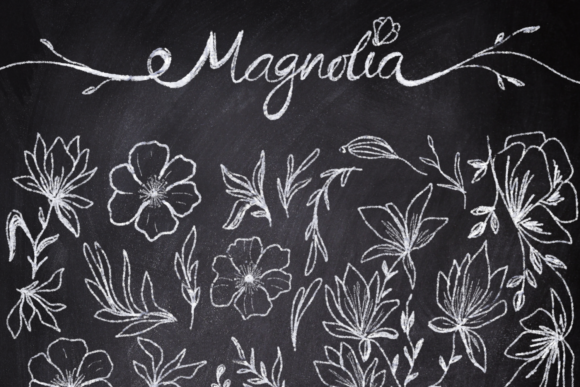
Magnolia Chalk Collection Review
As a designer who spends more time staring at stitch density charts and fabric swatches than sleeping, I don’t just buy digital files; I evaluate them for viability. When Magnolia Chalk Collection landed in my inbox, I didn’t immediately think about the file format. I thought about the finished product. Would it hold up on a customer’s chest? Would it look expensive or cheap after twenty wash cycles? Could this actually drive sales for an Etsy shop or elevate a boutique brand?
This review isn’t about listing technical specs that you can find in a metadata viewer. It is about the practical application of these Illustrations and Graphics in real-world embroidery scenarios. We are looking at how Magnolia Chalk Collection translates from a transparent PNG background into a tangible, tactile handmade product.
The First Impression: Mood and Visual Personality
The name "Chalk" suggests something ephemeral, soft, and perhaps a bit dusty or vintage. Visually, Magnolia Chalk Collection delivers on that promise with a distinct editorial vibe. The shapes feel organic rather than rigidly geometric, which is crucial for embroidery. Rigid lines often translate poorly into thread unless they are perfectly executed satin stitches, but organic curves allow for the natural variation of fill stitch and running stitch to shine.
What stands out immediately is the arrangement. Because the source elements are provided in RGB format with transparency, you have the freedom to place these designs on any background color before committing to thread. This is a massive advantage for designers. You aren't locked into a pre-colored palette that might clash with your target market’s preferences. Instead, you can experiment with how the Magnolia Chalk Collection interacts with different fabric textures. Does it look too stark on denim? Too lost on linen? The flexibility here allows for precise color matching, ensuring that the final embroidery project feels intentional and cohesive.
Real-World Application: From Screen to Stitch
Let’s talk about where this design truly earns its keep. In my experience, certain motifs scream "apron" while others beg for a "tote bag." Magnolia Chalk Collection sits comfortably in the versatile middle ground. It has enough detail to be interesting but not so much clutter that it becomes muddy when stitched at small sizes.
Imagine preparing a custom order for a local bakery owner. They want their logo embroidered on aprons, but they also want a secondary, softer design for gift bags. A large, complex corporate logo won’t work there. However, an element from Magnolia Chalk Collection could serve as a beautiful accent on a canvas tote bag design. The transparency of the original graphic means you can scale it down without worrying about losing context. It works beautifully as a standalone embroidered patch or as part of a larger composition on a sweatshirt embroidery piece.
I also see strong potential in the nursery and baby market. Baby clothes require gentle aesthetics. The chalk-like texture implies softness, which aligns well with the emotional connection parents have with their purchases. Whether it’s a onesie, a blanket, or a quilted pillow cover, the visual weight of these Graphics is light enough to feel delicate yet substantial enough to convey quality. For an Etsy seller, this is gold. It bridges the gap between trendy digital art and traditional craftsmanship.
Where Caution Is Required
No design is perfect for every surface. While Magnolia Chalk Collection is adaptable, there are specific contexts where it requires careful handling. If you plan to use this on curved surfaces like caps or hats, you need to be mindful of distortion. Embroidery machines stretch fabric as they stitch, and intricate details can warp if the hoop size isn’t chosen wisely.
Similarly, textured fabrics pose a challenge. If you are stitching onto a heavy bouclé wool or a nubby linen, fine details from the collection may get lost in the weave. In such cases, relying solely on satin stitch outlines might not provide enough definition. You may need to simplify the design or increase the spacing between elements to ensure clarity.
Another area to watch is dark fabric. Since the original assets are RGB-based and transparent, you have control over thread colors, but contrast is key. If you choose thread colors that are too similar to the fabric, the design will disappear. Always test your thread colors against the actual garment fabric before running a full production batch. This is especially important for commercial embroidery projects where returns due to poor visibility can hurt your bottom line.
Impact on Product Value and Brand Trust
When customers buy handmade goods, they are buying into a story. The quality of the embroidery reflects the professionalism of the maker. A sloppy stitch count or a design that looks pixelated because it was stretched too far signals amateurism. Conversely, a well-executed Magnolia Chalk Collection design suggests attention to detail.
Because these are high-quality Illustrations, they lend themselves to premium presentation. When you create printable mockups for your online store, using a clean, well-composed design helps buyers visualize the final result. It builds trust. Buyers can see that the design is balanced and aesthetically pleasing even before they receive the physical item. This visual confidence often translates to higher conversion rates and fewer customer service inquiries about "what it will look like."
Furthermore, the versatility of the collection supports brand consistency. If you run a small shop selling personalized gifts, you can use different elements from Magnolia Chalk Collection across various products—caps, tea towels, kitchen towels—creating a recognizable aesthetic without repeating the exact same image. This variety keeps your inventory fresh while maintaining a cohesive brand identity.
Practical Designer Notes for Implementation
Before you upload these files to your machine, take these steps to ensure success:
- Test on Scrap Fabric: Never assume a design will behave the same way on all materials. Stitch a sample on the exact fabric you plan to sell. Check for puckering, thread breaks, or registration issues.
- Check Stitch Density: Ensure the design’s density matches the fabric weight. Heavy densities on thin fabrics will cause damage, while light densities on thick fabrics may look sparse.
- Confirm Hoop Size: Make sure the design fits within your standard hoop sizes. If it doesn’t, you’ll need to split the design, which can complicate alignment during multi-hooping.
- Review Small Details: Zoom in on the original graphic. Are there tiny lines or dots that might disappear when stitched? Simplify if necessary.
- Black and White Mockups: View your design in grayscale. This helps you assess contrast and balance without being distracted by color.
- Stabilizer Selection: Choose the right stabilizer for your fabric type. Cut-away for knits and stretchy garments; tear-away for wovens.
- Licensing Verification: Although the description mentions RGB format and transparent PNGs, always double-check the license terms if you intend to sell finished items. Ensure you have commercial rights for the digital embroidery file usage.
Final Verdict
Magnolia Chalk Collection is more than just a set of pretty pictures; it is a functional tool for modern embroidery designers. Its transparency and RGB compatibility offer creative freedom, while its organic aesthetic fits seamlessly into a wide range of custom apparel and personalized gift markets. By approaching it with the caution and testing protocols outlined above, you can transform these digital assets into high-value, desirable physical products that resonate with customers and stand up to the demands of daily use.
Whether you are a hobbyist making holiday gifts or an Etsy seller scaling your craft business, this collection provides the visual foundation needed to create professional, appealing embroidery projects. Just remember: the best design is only as good as its execution. Test, refine, and stitch with confidence.